
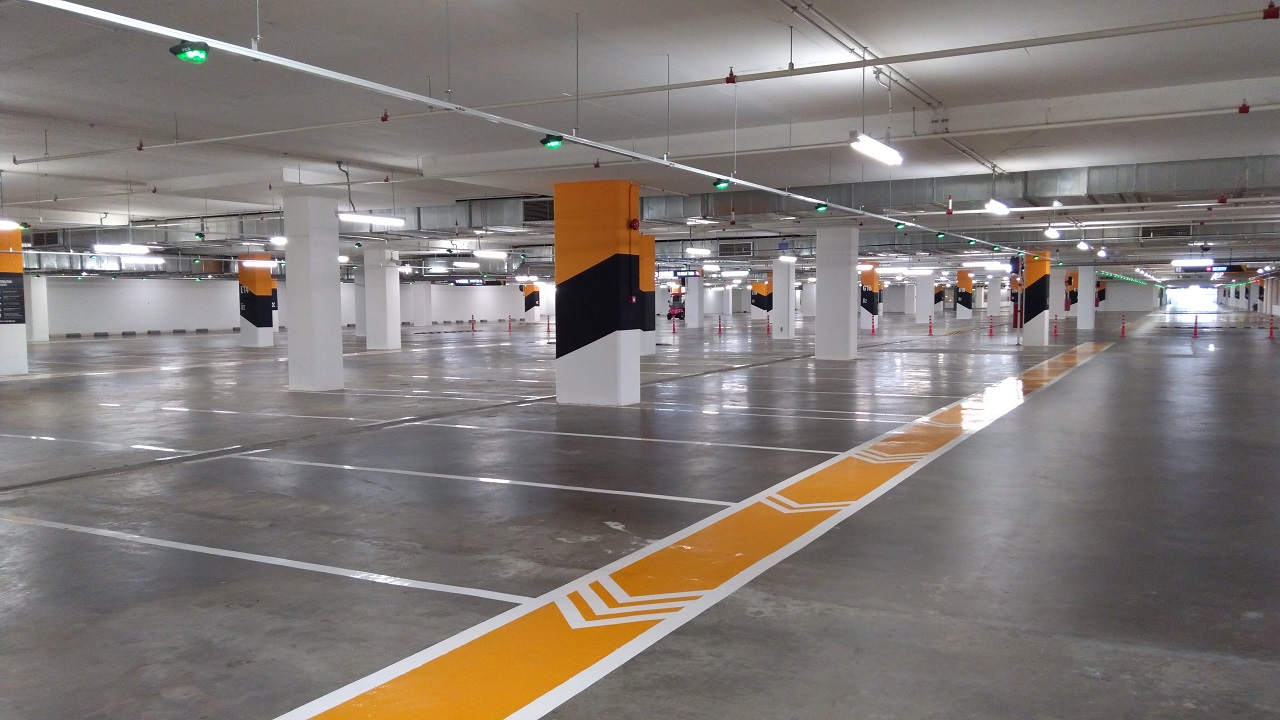
For decades, multi-level parking structures have been designed with one goal in mind: to store vehicles. Yet today, that single purpose is being challenged. Shifting mobility habits, from the growing popularity of public transport and ride-hailing to the rise of micro-mobility and electric vehicles, are reshaping the way people think about car ownership. Add to this the possibility of autonomous vehicles reshuffling travel behavior, and the long-term demand for traditional parking suddenly looks uncertain. This raises a pressing question: what happens to all those garages if fewer people own cars?
Car ownership is no longer the default it once was. Younger generations in particular are demonstrating less interest in buying vehicles, preferring the flexibility of shared mobility or on-demand services. Governments and municipalities are pushing the transition further by encouraging public transport and creating low-emission or car-restricted zones. Airports, shopping centers, and real estate developers are also seeing the effects of this trend, as parking demand evolves in unpredictable ways.
The economic stakes are high. Parking structures are expensive to build and maintain, and a decline in occupancy means lost revenue for operators. Beyond financial considerations, the sustainability aspect is also significant. Repurposing existing facilities reduces waste, saves resources, and extends the useful life of concrete-heavy structures, which have a large environmental footprint. At the same time, these buildings often occupy prime land in strategic locations, making them attractive for new functions that may provide greater long-term value.
Repurposing can take many forms. One direction is the transformation of garages into modern mobility hubs. Instead of rows of idle vehicles, these spaces can host EV charging stations, bike and scooter storage, and designated pick-up points for ride-hailing services. Logistics companies see another opportunity: parking structures located near city centers or transport nodes can be converted into last-mile delivery centers, helping meet the relentless growth of e-commerce. Some even imagine rooftops doubling as drone ports in the future, offering a new layer of urban logistics.
The shift also opens the door to more community-focused uses. Developers have already begun experimenting with converting underused parking structures into co-working spaces, gyms, or cultural venues. In some projects, the top levels have been turned into green rooftops, cafés, or event spaces, bringing vibrancy to areas that were once purely functional. Others are taking an even bolder approach by retrofitting garages into housing or mixed-use developments. Architects are starting to design “future-proof” parking structures from the outset, with flat floors, higher ceilings, and removable ramps to make future conversions smoother.
Of course, repurposing is not without its challenges. Many garages were not built with flexibility in mind, and features like sloped floors or low ceilings can limit their adaptability. Local zoning rules and building regulations can create further obstacles, sometimes making it easier to demolish and rebuild than to transform. The financial case must also be carefully weighed: while adaptive reuse can be more sustainable, the upfront costs are often substantial, and operators need clear pathways to return on investment.
The most forward-looking projects today are those that prepare for both present demand and an uncertain future. By incorporating adaptable layouts, modular design, and sustainability features, developers can ensure that their structures remain relevant even if car ownership continues to decline. This approach not only protects investments but also positions operators as leaders in shaping the evolving mobility ecosystem.
The decline of car ownership does not spell the end of parking—it marks the beginning of a new chapter. Tomorrow’s parking structures may no longer be thought of as places to simply store vehicles, but as dynamic assets that power mobility, logistics, community life, and even energy systems. In this sense, repurposing is not just a practical necessity; it is an opportunity to reimagine what these spaces can contribute to society in the decades to come.
 About Parking Network
Parking Network is the leading information source for parking. We connect professionals through our online and offline channels. On our online platform parking.net, we publish the latest news, product showcases, job openings, and tenders related to parking. On our platform, you can access the most complete industry and parking professionals directory. Offline, we host niche-specific networking events such as the Airport Parking Network Event.