

EYSA - Low Emission Zones Operation
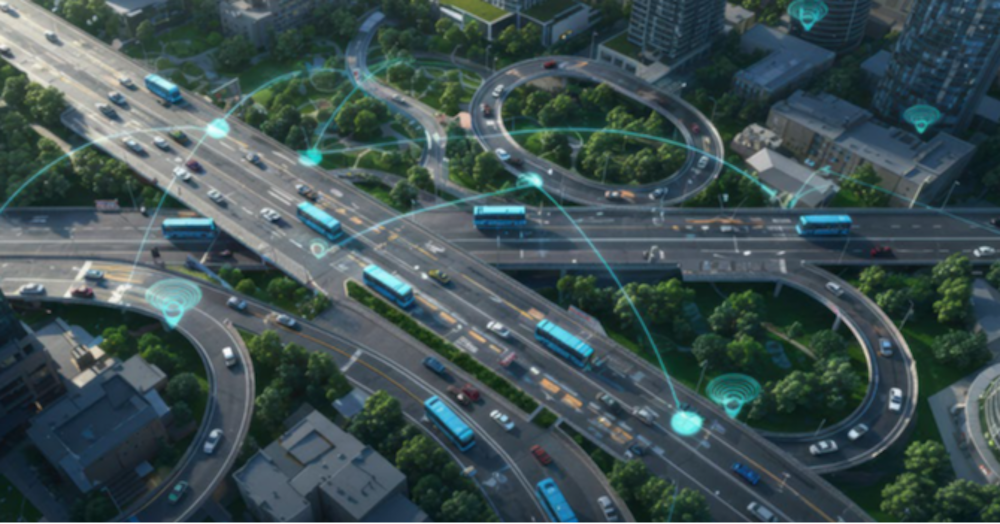
At EYSA Group we adopt a comprehensive approach covering every key stage in the conception and implementation of smart mobility, from designing innovative solutions to providing equipment and delivering services, including the corresponding systems.
We are committed to driving sustainable mobility, anticipating both current and emerging needs through strategic collaboration and forward-thinking solutions. Low Emission Zones (LEZs) are a key tool for moving towards smart cities with more sustainable forms of transport by restricting the access of the most polluting vehicles in urban areas. These measures, driven by regulation, contribute to improving air quality and fostering urban environments greener and healthier, but also enables a more efficient use of the public space with less private cars on the streets.
EYSA Group has been connected to Low Emission Zones since their inception, with Madrid’s Central Almond, the more restricted Zone in the Center of the city and the Metropolitan Area of Barcelona as relevant experiences. Since then, we have continued to be the undisputed reference, achieving important milestones such as the access control of Madrid’s M-30 or major cities like Valencia, Oviedo, Gijon, San Sebastian, Bilbao and others. We manage more than 50% of these systems in Spain and we play a key role in the implementation and operation of these public policies. Through innovative technological solutions and in-depth knowledge of the urban environment, we contribute to reducing polluting emissions, improving air quality and help cities to mitigate the effects of climate change. This positions us as a strategic ally for the administrations in the journey to a cleaner, more efficient mobility and environmentally friendly.
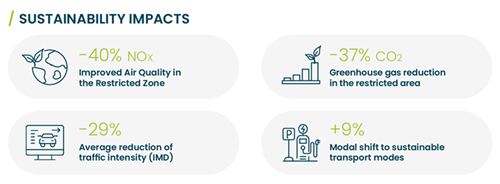
Data source: own elaboration based on the methodology developed by the University of Berkeley and the Polytechnic University of Madrid. Impact information referring to the average impact of the measures in relation to an unregulated scenario (annual basis).
Regarding urban traffic control, our solutions enable the implementation of mobility strategies based on traffic conditions or air quality and provide immediate responses in case of unforeseen events such as unusual traffic peaks, accidents, or adverse weather conditions. Our AI capabilities also enable us to anticipate patterns and traffic events combined with weather conditions so cities can prevent and not react.
Low Emission Zones are becoming a vital tool for creating greener, healthier, and more livable cities. Combined with measures such as regulated parking, traffic control, and curbside management, they play a central role in urban decarbonization strategies.
EYSA Group takes this a step further. By combining operational data with AI and machine learning, we help cities predict traffic patterns, prevent unusual events, and reduce congestion. External factors, such as weather conditions, are also built into our models. The result: smoother mobility, cleaner air, and a better quality of life for citizens.
Our outstanding capabilities in creating innovative solutions based on cutting-edge technology enable more efficient management of operations and infrastructure, both by us and our clients. For more details read our “EYSA Sustainability report 2024” or you can contact us directly.
About EYSA
Since 1976, EYSA has specialized in facilitating regulatory changes affecting mobility and infrastructure. EYSA serves public bodies, local and regional governments, as well as national transportation authorities..jpg "EYSA")
The EYSA Group develops and operates high-performance solutions to address the main challenges of urban and interurban mobility infrastructure management in more than 350 cities across 28 countries on 4 continents.
EYSA's business model adds value to clients through the design, development, investment or financing, implementation, and management of mobility solutions, as well as assuming operational and demand risk where applicable.
Among the Group's solutions are regulated parking control and management in cities, city access control systems, implementation and management of low emission zones, implementation of road safety and urban traffic systems, management of off-street parking such as airports, hospitals, and transportation infrastructures, interurban traffic management systems, intelligent toll systems, and support in tax, fee, and fine management and collection.
















Comments
There are no comments yet for this item
Join the discussion