

Fleximodo: How Do Parking Sensors Work? A Complete Guide to the Technology
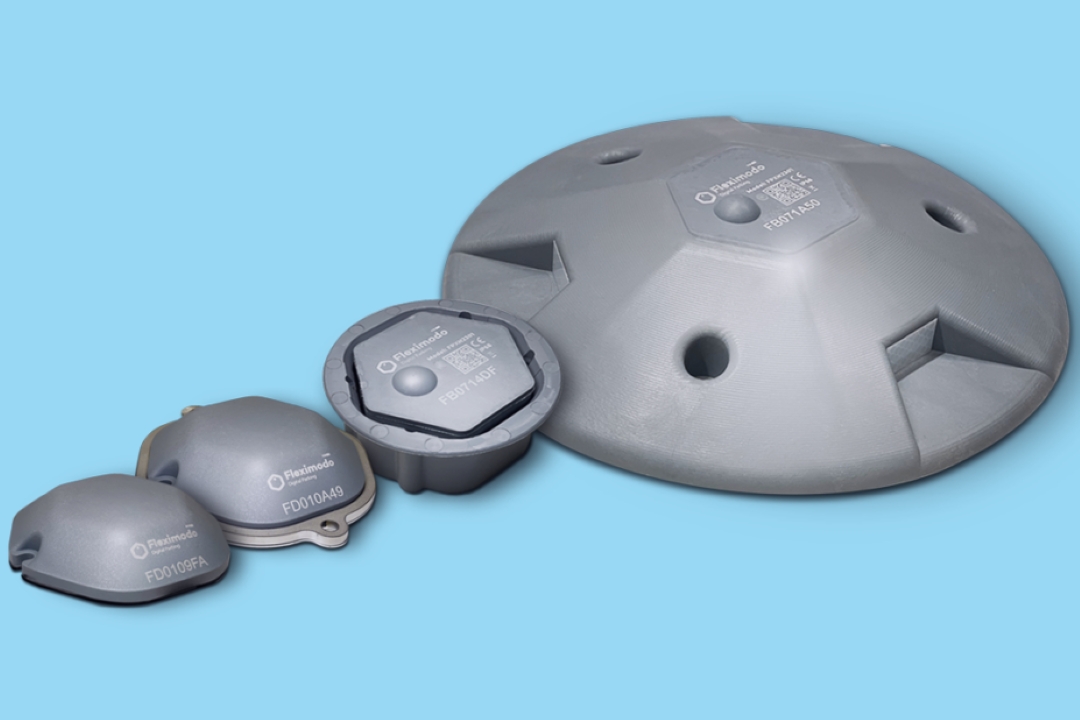
How do parking sensors work? A magnetometer spots the car, a radar pulse confirms it, and the result travels wirelessly to the cloud. Here is the detection technology behind IoT parking sensors, explained step by step.
How Do Parking Sensors Work?
In short, an IoT parking sensor sits at a single space and notices when a car changes the magnetic field above it. Then it fires a radar pulse to confirm the reading, and it sends the result wirelessly to the cloud. Because two methods work together, detection reaches 99.96% accuracy. So the system knows a space is taken within seconds, without a camera and without any wiring in the ground.
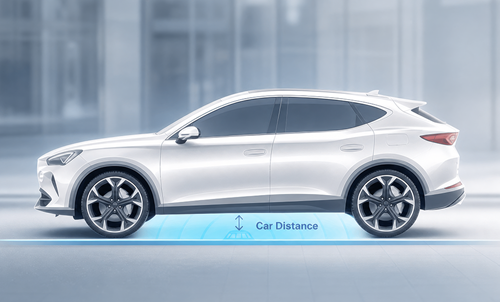
That combination is the whole trick. However, to see why it is so reliable, it helps to look at each detection method on its own.
What a Parking Sensor Actually Detects
A parking sensor does not "see" a car the way a camera does. Instead, it measures physical change directly under the vehicle. Fleximodo uses two independent signals for this: the earth's magnetic field, and reflected radar. Because each signal fails in different conditions, using both removes almost every false reading. As a result, a parking occupancy sensor stays accurate in glare, darkness, rain, and snow, where a lens would struggle.
Magnetometer Detection: How a Car Changes the Magnetic Field
Every vehicle is a large mass of metal. So when a car parks over the sensor, it distorts the local magnetic field, much like a magnet bends the needle of a compass. A magnetic parking sensor measures that distortion and reads it as "occupied." When the car leaves, the field returns to normal, and the sensor reads "free."
This method is cheap, low-power, and reliable for most cars. However, it has one weakness. For example, a large metal object nearby, or a very high vehicle with a lot of ground clearance, can occasionally confuse a magnetometer working alone. That is exactly why a second method matters.
Radar Confirmation: Why the Second Signal Matters
A radar parking sensor sends a short pulse upward and measures what bounces back. If something solid sits close above the sensor, the radar confirms a vehicle. So when the magnetometer and the radar agree, the reading is certain. This dual approach is how Fleximodo reaches 99.96% verified accuracy, compared with roughly 95% for magnetometer-only sensors.
In other words, the magnetometer does the everyday work, while the radar catches the edge cases. Together they cover for each other.
Radar-Only Mode
Sometimes a site makes magnetic detection unreliable, for instance a steel-deck car park or a spot right beside heavy machinery. In those cases, the sensor can run in radar-only mode. Therefore even difficult surfaces get accurate occupancy data, without special cabling or civil works.
Power and Connectivity
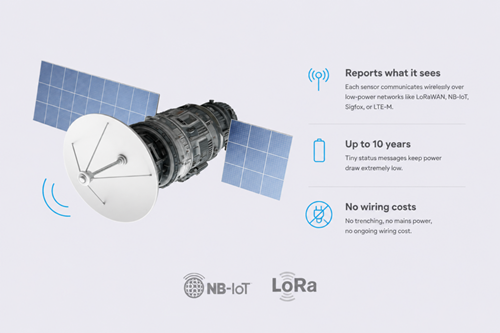
A parking sensor is useless if it cannot report what it sees. So each unit communicates wirelessly over a low-power network, such as LoRaWAN, NB-IoT, Sigfox, or LTE-M. Because the sensor sends a tiny status message rather than a video stream, power draw stays extremely low. As a result, one battery lasts up to 10 years, and there is no trenching, no mains power, and no ongoing wiring cost.
Under-Surface vs On-Surface Mounting
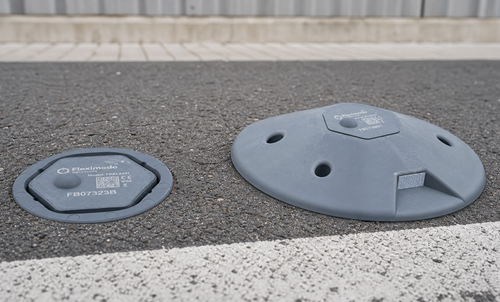
Finally, the same sensor fits almost any site through two mounting options. An under-surface adapter drops the unit flush into the road, which keeps it hidden and protected. An on-surface adapter fixes it to the top of the tarmac, which suits sites where drilling is limited. Either way, installation takes minutes per space rather than hours.
How Do Parking Sensors Work, Step by Step
Here is the full sequence, from empty space to live data.
- A car parks over the sensor, so the magnetometer registers the change in the magnetic field.
- Next, the radar fires a pulse and confirms a vehicle is present.
- Then the sensor sends an "occupied" message over its wireless network.
- Within seconds, the cloud platform updates that space and any connected app or sign.
- Finally, when the car leaves, the sensor reports "free" and the count updates again.
To see how that live data becomes guidance, payments, and enforcement, read our guide to the digital parking management system.
 About Fleximodo
We are experts in IoT, miniaturization, long-distance communication, space-qualified electronics, and telecommunication technologies. Our team develops cutting-edge technologies, also leveraged for Fleximodo's smart parking solutions. Fleximodo offers high-precision, cost-effective IoT tools for sustainable and efficient parking.
















Comments
There are no comments yet for this item
Join the discussion