

Stagnoli: How to Eliminate Blind Spots in Warehouses with Interconnected Traffic Light Systems
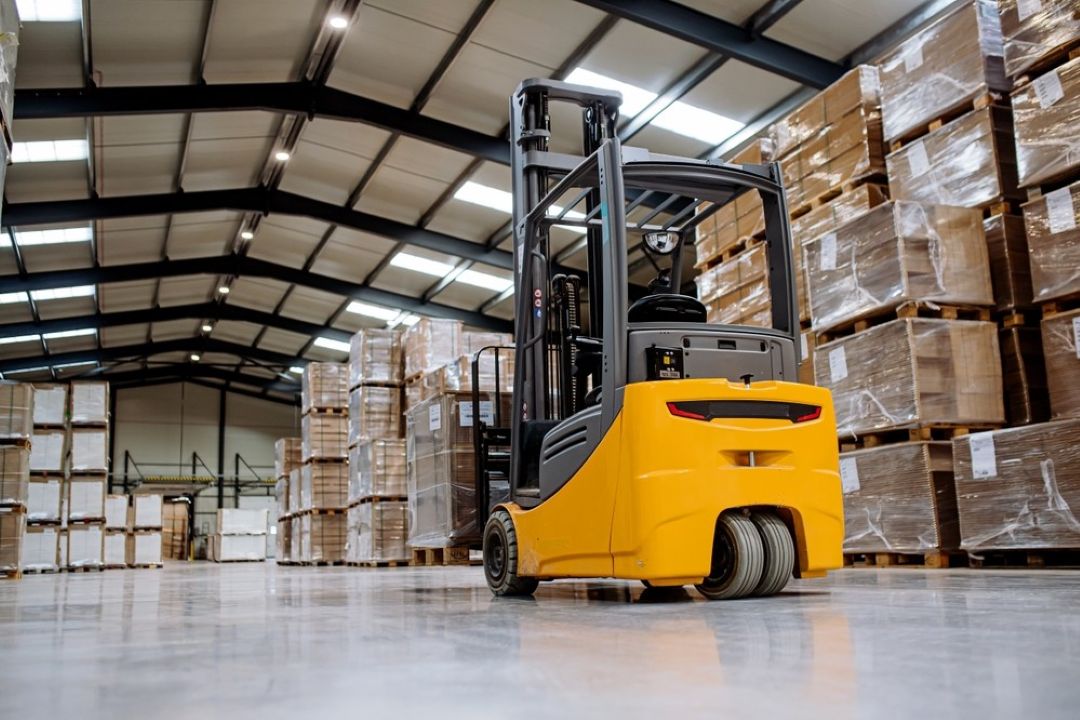
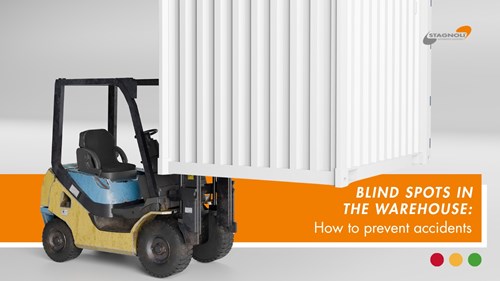
Safety in high-intensity operational warehouses depends directly on the ability to eliminate blind spots in warehouses, where the interaction between forklifts and pedestrian personnel is most critical. In modern logistics environments, limited visibility at intersections and racking is the main cause of collisions which, in addition to endangering worker safety, result in costly production downtime and an increase in insurance premiums.
Automating Right-of-Way via Sensors and Light Signals
The integration of interconnected motion sensors and smart traffic lights creates an active digital barrier that prevents accidents before they occur. An industrial traffic light with motion sensor detects the simultaneous presence of pedestrians and forklifts near a critical point, instantly activating visual alerts that regulate the flow of internal traffic.
These solutions include traffic light systems for internal warehouse intersections, designed to manage crossings safely and efficiently. In particular, a traffic signal lantern for forklifts provides clear and immediate visual communication to operators, improving reaction times and reducing collision risks.
For Logistics Managers and HSE Managers, this solution represents the transition from passive safety (based solely on operator caution) to active and redundant safety. The system operates as a unidirectional right-of-way regulator: the sensor acts as a “sentinel” for the mechanical vehicle, ensuring smooth maneuvering for the forklift and warning the pedestrian of the imminent danger.
| Detection State (Forklift Only) | Forklift Side Signal | Pedestrian Side Signal | Required Action |
| Forklift Approaching | Green (Priority) | Red (Pedestrian Stop) | The forklift proceeds without slowing down; the pedestrian must stop. |
| No Forklift Detected | Off / Green | Green (All Clear) | The pedestrian can cross safely; the area is clear of moving loads. |
| Power Outage | Red | Red | In the event of a fault, the system imposes a precautionary stop on both for safety. |
Economic Benefits and Reduction in Insurance Premiums
The implementation of technical systems to manage blind intersections allows companies to access significant reductions in their average insurance premium rates, as outlined by INAIL prevention models (e.g., OT23 form). Investing in technology is therefore not just a cost, but a financial strategy: the decrease in injury risk lowers the company’s “risk score,” generating direct and measurable savings on annual fixed costs.
The installation of these technical solutions fully meets the requirements of Legislative Decree 81/08 regarding risk assessment and safety signage. For installers and business owners, the process is simplified by the modular nature of the sensor kits, which can be configured without the need to structurally modify the warehouse layout. Maintenance requirements are minimal, ensuring constant 24/7 operation even in poorly lit or highly noisy environments.
Why Choose an Interconnected Solution
Unlike traditional convex mirrors, which require constant attention and can be subject to glare or dirt, active luminous signaling instinctively catches the operator’s peripheral vision. For those managing logistics, this means reducing human error and creating a work environment where technology works silently to protect the most precious asset: people.
About Stagnoli
_main.jpg "Stagnoli") Stagnoli Accessories is a solid Italian manufacturing company based in the Brescia area, founded in 1981. The company specializes in the design and production of accessories for gate automation (Home & Building Automation) and industrial luminous signaling. Although it has a strong international vocation—exporting to over 50 countries worldwide—it proudly maintains its entire production chain in Italy.
Stagnoli Accessories is a solid Italian manufacturing company based in the Brescia area, founded in 1981. The company specializes in the design and production of accessories for gate automation (Home & Building Automation) and industrial luminous signaling. Although it has a strong international vocation—exporting to over 50 countries worldwide—it proudly maintains its entire production chain in Italy.















Comments
There are no comments yet for this item
Join the discussion