

Unity5: Prepared for the Single Code of Practice? Tips on How to Be Compliant

Private Parking Operators and the Single Code of Practice – We’re Here to Help
With the final transition deadline approaching on 31st December 2026, all existing private parking sites in the UK must be fully compliant with the Single Code of Practice.
We know that for parking operators, this milestone marks the end of the phasing-in period. You’ll have been assessing your operational processes and reviewing signage. Reliable and configurable enforcement software now is critical to ensuring seamless compliance and avoiding missing out on revenue.
The new consolidated Code of Practice provides operators with a single set of straight-forward rules that will, in the words of the BPA and IPC, “Raise standards and deliver greater transparency and consistency for the benefit of motorists.”
Hannah Fuller, who is BPA Vice-President alongside her role as Director of Commercial Strategy & Partnerships at Unity5 said:
“The Single Code of Practice, will deliver standardisation and transparency to motorists. Our team has worked closely with both the BPA and IPC and with our customers to ensure that our tech, docs and templates are code ready. A big shout out to the British Parking Association and The International Parking Community (IPC) for their hard work, lobbying and collaboration in getting this to market.”
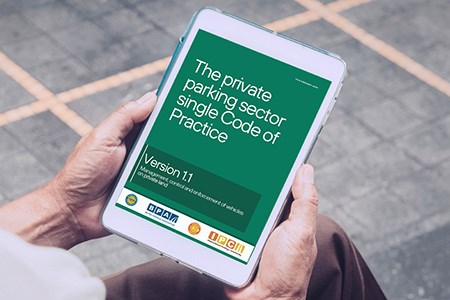
Many private parking operators are now fine tuning their estates to be ready for the Single Code of Practice on 31st December 2026
Quick Recap – The Core Requirements of the Single Code
As the 31st December deadline arrives for all legacy sites, operators must ensure their workflows align with the Code’s core stipulations:
- Charge Caps: Operators must adhere strictly to permitted parking charge limits. Familiarise yourself with the capped structures for standard contraventions versus serious breaches (such as unauthorised use of designated disabled bays).
- Mandatory Grace Periods: A mandatory 10-minute grace period must be provided immediately following the expiry of any paid-for or free parking duration.
- Consideration Periods: Motorists must be granted a minimum 5-minute consideration period upon entering a site before any enforcement action or parking charge can be issued, giving drivers adequate time to review signage and decide whether to stay.
- Signage Compliance: Signage specifications are rigorous. Review your locations to ensure minimum text sizes, proper contrast ratios, and clear eye-level placement at every entry point and across the site.
- Debt Recovery Standards: Communications managed directly by your operation or third-party debt recovery partners must strictly prohibit misleading, aggressive, or threatening language.

Signage, ANPR camera triggers, and grace-period algorithms must match the single standard by 31st December 2026.
What Does This Mean for My Operations and Appeals Management?
With motorist rights heavily emphasised under the unified Code, any failure in process directly impacts the validity of issued Parking Charge Notices (PCNs). Your appeals management team should note that charges will likely be overturned if:
- A charge exceeds the permitted cap.
- The 10-minute post-expiry grace period was not factored into the system logic.
- Site signage falls short of the exact text size, placement, or contrast specifications.
- Any debt collection correspondence deviates from compliant communication standards.
How Can My Team Manage Appeals Faster, Ready for the Single Code of Practice?
Parking operators are already using Unity5’s AI-enhanced Intelligent Responses module, which is like adding a new colleague to your team, one who is fully up to speed on your policies – without the time, cost and uncertainty of recruitment. The better the information it is given, and the more carefully it is monitored and trained, the better it performs:
- It can be configured to highlight tone and sentiment, including aggressive or abusive language
- It can surface signs of vulnerability, picking up references such as a Blue Badge, accessibility or assistance
- It can identify representations that appear to have been written by AI or copied from a template.
- All of this is presented up front, before anyone has opened the case.
By utilising an organisation’s own parking and cancellation policies, the relevant Single Code of Practice and appeals charter, the assistant is “primed” with the rules its suggestions must follow. Teams can go further, adding granular prompts for specific scenarios, and can scope the tool to particular sites or clients. Crucially, the system is only ever as good as the policies it is given: without them, it would have nothing to reason against.
Click here to learn more about our AI-enhanced Intelligent Responses module
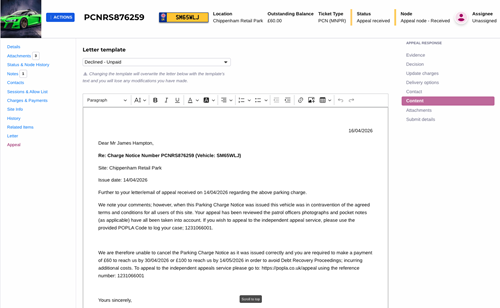
An example of Unity5’s motorist-friendly appeals response using AI
How Should I Be Managing Transition and Legacy Sites?
While new sites were required to meet standards swiftly upon the Code’s initial rollout, the transition window up to 31st December 2026 was granted to allow operators to update pre-existing legacy locations.
- No Retrospective Application: New rules apply based on the timestamp of the contravention. Historical charges issued prior to enforcement milestones are assessed under the rules active at that specific time.
- Full Site Audit: Ensure that your entire portfolio – especially older locations, undergoes a comprehensive audit before the end of December. Signage, ANPR camera triggers, and grace-period algorithms must match the single standard.
What Does the Future of Private Parking Look Like from 2027?
Regulation is tightening, and the operational focus is shifting firmly towards transparent, technology-driven enforcement. Ensuring your software systems automate grace periods, consideration windows, and accurate charge calculations will protect your business from systemic non-compliance.
Note: If you operate sites in Scotland, remember that separate regulations apply under the Regulation of Private Parking in Scotland framework, which features its own distinct rules for enforcement and appeals.

To revisit the full Single Code of Practice (v1.1) recommendations click here
(No changes have been made to the substantive provisions, requirements, or guidance set out in the main body of the Code. The operative text remains as published 17 February 2025.)
For advice please contact your Unity5 Account Manager
New to us? Contact us here
 About Unity5
Unity5 is the creator of Zatpark - SaaS Solutions For Parking, Enforcement and Environmental Management - Designed for private parking companies and public sector bodies, Zatpark delivers world-class features completely controlling and automating the full lifecycle of parking enforcement data, from issue to recovery action and every step in-between. Built-in ANPR, Moving Traffic Violation Management and dedicated Permit and Kiosk solutions, Zatpark, Zatmobile, Zatpermit, Zatenviro, and Zatpark Flexible Enforcement provide end-to-end management of all your PCN and FPN activities.














Comments
There are no comments yet for this item
Join the discussion