

Unity5: How Digital Visitor Parking Permits Are Making Life Easier for Councils and Operators

Council officers and parking operators have been waving goodbye to paper permits, and for good reason. Digital visitor parking permits offer new levels of flexibility, keeping cities and towns moving even through the peaks of seasonal traffic.
Local authorities and landowners across the UK need robust and reliable digital parking permit schemes to cater for the wide-ranging of needs of their local motorist community. They also need a flexible system, one that can easily cover the varying levels of visitor parking permits needed at any one time.
Streamlined Administration and Reduced Costs
One of the most immediate benefits for councils and parking operators is the significant reduction in administrative burden and associated costs. Digital systems eliminate the need for printing, distributing, and manually processing paper scratch cards or physical permits. This not only saves on materials and postage, but also frees up staff time that would otherwise be spent on handling applications, payments, and queries related to physical permits. The entire process, from application to activation, can be automated and managed online, leading to a much more efficient operation.
Usual practice is to allow residential addresses two lots of printed or ‘scratch card’ visitor parking permits per year. Digital Permits give greater flexibility on how a resident uses their allocation of hours for any visitors to their property – rather than using a one-day ‘scratch card’ (enabling patrons to simply mark off their date of arrival digitally to validate their parking), for a visit that may only be for a couple of hours or won’t last the whole day.
Enhanced Enforcement and Compliance
Digital permits greatly improve the effectiveness of parking enforcement. Civil Enforcement Officers (CEOs) or Parking Enforcement Officers, can use handheld devices to instantly check a vehicle’s registration number against a live database, verifying if it has a valid permit. This real-time access to information means no more ambiguity from poorly displayed or illegible paper permits, reducing the chance of incorrect fines and making it harder for drivers to misuse permits. This leads to better compliance with parking regulations and a more equitable use of parking spaces.
Improved User Experience and Flexibility for Residents
For residents, digital visitor permits offer unparalleled convenience and flexibility. They can purchase and activate permits online 24/7, from anywhere, without needing to collect physical scratch cards or worry about them being lost or damaged. Many systems allow residents to book visitor parking for specific durations, even by the hour, offering better value for money compared to traditional half-day or full-day scratch cards. This increased accessibility and ease of use significantly improves resident satisfaction with parking services.
Digital Visitor Permits are Easy to Set Up with Zatpermit
Unity5’s market-leading software Zatpermit is dynamic enough to fully support residents. For example, if they live in a residential zone where restrictions only apply for part of the day, any hours they allocate that go beyond their zone’s end time will be carried over to the start of the next day. Digital permits can be started immediately via their account 24/7 or pre-booked. Residents simply need to know the registration number of the person who will be visiting and add the vehicle to their account to start the permit. Digital visitor parking permits can be refunded if they change address and have unused hours on their account.
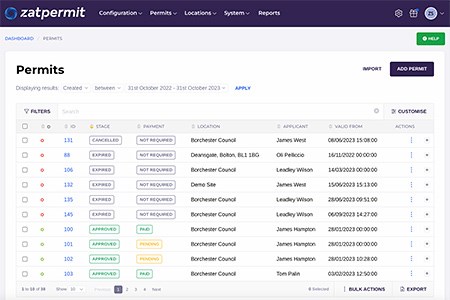
Protecting your Residents with Visitor Parking Permits
Residential parking schemes exist to protect residents from commuter parking and provide priority over the limited number of street spaces available. As there is little off-street parking in many Controlled Parking Zones, residents and visitors may compete for on-street parking with typically only one space available per house frontage. The introduction of year-dates to the life expectancy of visitor permits prevents non-eligible persons from obtaining and misusing or selling permits when a resident leaves an address.
How do Councils or Parking Operators Allocate Visitor Parking Permits?
Visitor permits are now almost all virtual (digital) by default – a move away from old paper based permits. In order to provide fair service, each resident is typically limited to the council’s preferred limit of visitor permits per year. The council will typically configure other permit rules to match their enforcement, such as disallowing the purchase of additional permits once the annual allocation is used, defining permit activation periods after purchase and setting a maximum number of vehicles per residence.
Who can apply?
Councils typically configure eligibility rules within their permit system. For example, they may allow any resident of an eligible property to apply for visitor parking permits online. Permit eligibility rules can be customised for each scenario, such as ensuring applicants are aged 17 years or over, or setting variable permit rates for Blue Badge holders.
What is Required at Application?
Councils can define their own evidence rules for permit applications. They may choose to require only a single document for proof of residency, such as a bank statement or Council Tax bill. They may also choose which documents they require as proof of ownership of the applicant’s vehicle, such as an insurance document. Simpler evidence requirements can be defined for residents who don’t own a vehicle, but require visitor permits. If a resident doesn’t have the necessary proof documents, the council may allow them to apply for a temporary permit while they process their application.
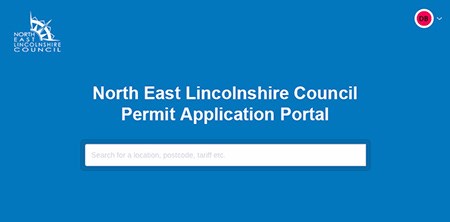
10 Ways the Zatpermit Self-serve Applicant Portal Saves Time for Administrators
Unity5’s Zatpermit Applicant Portal provides self-service management of permit applications and payments. This is a great time saver for administrators as permit applicants can do all this themselves:
- Update their account details
- Manage their password
- See a list of available parking permit locations
- Apply and pay for new permits
- See a list of their digital permit and scratchcard permit applications
- Manage their list of permitted vehicles
- Manage their SMS and email notifications
- Cancel a Permit
- Manage their documents that support Permit applications
- Redeem Scratch card or digital permit credits for a visitor parking session
Other Common Uses of Digital Permits are Available via Zatpermit software
Emissions based permits:
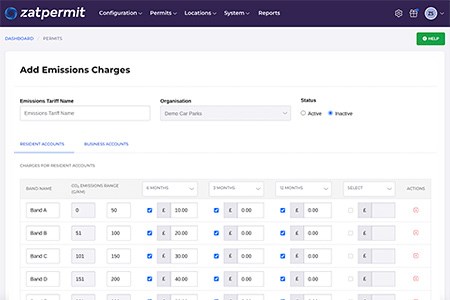
- Zatpermit includes the functionality to apply variable charges for permits based on the CO2 emissions of vehicles.
- The charges are based on the CO2 Emissions Range (g/km) information for the vehicle make and model.
- When an applicant applies for a permit based on emission charging, Zatpermit looks up the vehicle’s CO2 g/km using its number plate.
- A charge is then applied to the permit application based on an emissions charging table, meaning that permit charges vary based on the vehicle’s CO2 g/km emissions.
- The Zatpermit administrator sets these variable charges in the Zatpermit Emissions Charges table (example below).
- Emissions charging can be applied to tariffs and locations/sites in the same way as for standard tariffs.
Traffic Filter Permits:
Traffic Filters can be used to reduce or control the amount of traffic in specific areas. Traffic Filter rules support a council’s mobility strategies, such as:
- Improving school streets safety
- Improving air quality
- Reducing traffic volumes
- Restricting vehicle types
The council can allow permit holders and applicants to obtain or purchase credits to drive within defined Traffic Filter Zones. Tariff rules are configured to define each zone’s operating times and rules. Traffic Filter permits are enforced by combining Zatpermit credit functionality with moving traffic ANPR cameras.
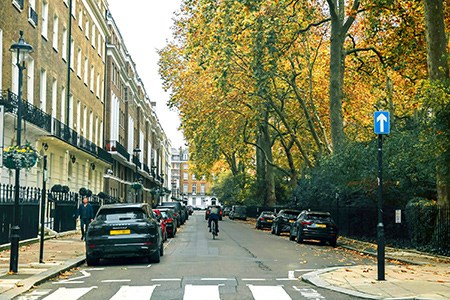
A Traffic Filter strategy does not require physical barriers, instead the defined filter zones are clearly identified by drivers using Traffic Filter Zone road signage. The zones are then enforced using integrated Automatic Number Plate Recognition (ANPR) cameras.
Permit holders with valid Traffic Filter credits can drive within the allowed zones. The details of vehicles passing through the filter zones will be checked against a database to see if they are automatically exempt or have a valid permit. Credits are deducted from their account every time their journey is recorded by one of the Traffic Filter ANPR cameras.
Typically, a council may allow exemptions, such as for University or College employees who must use the Traffic Filter zone regularly. The council may allow these employees to apply for a permit that provides a fixed number of day passes per car, per year. Similar rules can be set for students who are eligible to keep a vehicle within the zone.
The council may define different Traffic Filter zones. For example, they may define a zone for residents living in the wider area to apply for a reduced number of passes per car, per year.
Vehicle Type Exemptions
Certain types of vehicles, including vans and HGVs can be made exempt, allowing goods deliveries and maintenance vehicles to pass through the filter zones. Staff members of key organisations such as hospitals or the Police Force can be made exempt within the Traffic Filter zones. Similar rules can be applied to buses and coaches, as well as motorbikes and mopeds.
Other groups of drivers may also be allowed to apply for a Traffic Filter permit, even though their vehicles are not automatically exempt. These could include carers (paid and unpaid), patients who need regular hospital treatments, and other groups to which significant numbers of staff or students belong.
Traffic Filters allow you to maintain accessibility, for example Blue Badge holders and those driving disabled-class vehicles can be allowed to apply for a Traffic Filter exemption permit. The same rule could be set up for those with caring responsibilities, where driving through the zone is essential.
A council may also allow discretionary Traffic Filter permits for daily trade vehicles or landlords who regularly visit their properties.
Easy Renewals
Digital permits can be configured to automatically notify permit holders when their permits are about to expire. When a permit is ready to be renewed, a resident will receive an expiry notification email or SMS. The self-service permit system allows residents to simply log into their account and renew their permit. A wide range of rules can be applied to permit renewals, such as limiting the number of allowed renewals or restricting renewal periods.
Improved Security with Digital Permits
Unlike physical or printed permits, digital permits can’t be stolen or lost; they are assigned to the applicant, and only they can use them. By implementing a digital permit system, councils can eliminate the possibility of permit fraud. When combined with mobile app enforcement and ANPR technology, digital permit systems enable accurate vehicle identification and record keeping of authorised permit holders and Traffic Filter users.
A Truly Flexible System
Zatpermit software gives administrators comprehensive control over their back-office permit system. Zatpermit’s administration features include:
- User and role permissions management
- Use a custom URL for your Applicant Portal
- Apply your chosen branding to your Applicant Portal
- Manage your organisations
- Add new permit locations/sites
- Link permits to existing locations/sites
- Manage parking permit schemes for your locations
- Set and edit permit tariffs and durations
- Manage permit applications
- Set permit approval rules including auto-approval and auto-decline
- Manage permit availability at locations/sites
- Set business availability rules
- Create and manage permit application questionnaires
- Search for all permits using filtered lists
- Manage email notifications, reminders and recipients
You Gain Better Data Insights and Revenue Optimisation
Digital parking permit systems generate valuable data on parking trends, usage patterns, and peak times. This data provides councils and operators with insights that can inform parking and moving traffic policies, allow adjusted pricing strategies, and optimise the allocation of parking spaces. By identifying areas of high demand or underutilisation, they can make data-driven decisions that lead to more efficient parking management and potentially increased revenue.
Don’t just take our word for it
Visit our Case Studies page to see how Councils like North East Lincolnshire and Cornwall are using Zatpermit
For a friendly, no obligation chat with our permit experts or a demo of Zatpermit or MiPermit software click here to contact us or call our team on +44 (0)3333 442058
.png "Unity5") About Unity5
About Unity5
Unity5 is the creator of Zatpark - SaaS Solutions For Parking, Enforcement and Environmental Management - Designed for private parking companies and public sector bodies, Zatpark delivers world-class features completely controlling and automating the full lifecycle of parking enforcement data, from issue to recovery action and every step in-between. Built-in ANPR, Moving Traffic Violation Management and dedicated Permit and Kiosk solutions, Zatpark, Zatmobile, Zatpermit, Zatenviro, and Zatpark Flexible Enforcement provide end-to-end management of all your PCN and FPN activities
















Comments
There are no comments yet for this item
Join the discussion