

Adaptive Recognition: Beyond Reliability — Reducing Intervention in Large-Scale Access Control
Why the operational value of an access control system depends not only on how reliably it performs, but also on how little attention it requires.
Most access control systems today work in the sense that they detect vehicles and trigger barriers. But in a high-volume environment, simply working is no longer a sufficient benchmark for profitability. The real threat to a large-scale deployment isn't necessarily a total system blackout; it’s the accumulation of small, recurring interventions.
Every dirty plate that requires a manual override or camera reboot following a heatwave adds to the labor costs. Individually, these may be five-minute fixes. However, across a network of fifty sites, they can accumulate into a significant operational expense that erodes the ROI of automation. The goal is no longer just a working system—it’s one that requires minimal intervention.
The Gap Between "Reliable" and "Autonomous"
The distance between a "reliable" system and an "autonomous" one is defined by how it handles reality. Standard hardware often performs perfectly in a lab but requires constant human "chaperoning" to deal with environmental shifts, inconsistent lighting, or varying plate qualities.
If a system depends on a person to bridge these "reality gaps," it isn't truly independent; it is simply a tool that requires a full-time supervisor. For parking service providers, this is the ultimate margin-killer. To close this gap, we have to stop designing solely for peak performance in ideal conditions and start prioritizing consistent performance in the field.
 Designing for Zero Drift
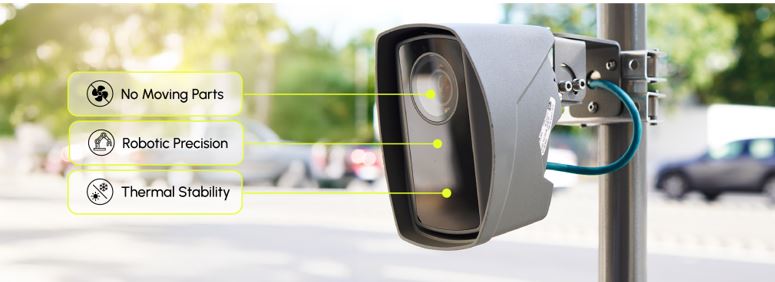
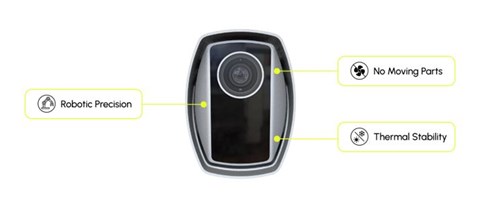
True autonomy requires a hardware philosophy that eliminates the common sources of variation. This is the logic behind Adaptive Recognition’s Einar camera:
- Eliminating Moving Parts: By removing fans and motorized components that wear out or drift, we eliminate the physical reasons a camera’s behavior might change over time.
- Robotic Precision: Even small differences in manual assembly can lead to inconsistent behavior across sites. Einar is manufactured entirely in-house using robotic assembly to ensure that unit #1 and unit #500 are optically and electronically identical.
- Thermal Stability: With a passive cooling design and a certified operating range of -40°C to +85°C, the hardware is built to perform the same way in a July heatwave as it does in a January freeze.
By minimizing hardware variability, operators can significantly reduce the need for maintenance-related site visits.
The "New Zealand" Benchmark: 500 Units, Zero RMAs
The theoretical benefit of low-intervention hardware is best proven by large-scale data.
In a recent large-scale deployment in New Zealand, 500 Einar units were installed across a diverse network of sites. After a full year of continuous operation, the result was a statistical rarity in the security industry: zero RMAs (Return Merchandise Authorizations).
No reported hardware failures. No replacement cycles. No site visits to address drifting performance.
For parking system operators, this is what reduced intervention can look like in practice. Less time spent managing hardware issues means more resources available for new, revenue-generating projects.
The Most Effective System is the One You Forget
As parking and access control systems become more integrated into smart city infrastructure, the expectation is shifting. It is no longer enough for a system to be "reliable" under ideal conditions. It must deliver consistent performance in real-world environments.
The most effective system isn't the one that sends you the most data or offers the most settings—it’s the one that keeps working so quietly that you eventually forget it’s there.
Optimize for Autonomy
If your current access control system still requires frequent attention, it may be time to take a closer look at the hardware behind it.
Adaptive Recognition’s Einar is designed to reduce the "operational overhead" of access control. Let's discuss how we can help you move toward a lower-intervention, higher-margin deployment.
Discuss Your Project with Our Team | Explore Einar's Technical Specifications
About Adaptive Recognition
 Adaptive Recognition is a global leader in access control and intelligent recognition, delivering advanced technology to enhance security, simplify operations, and improve efficiency. AR's innovative hardware and software integrate seamlessly with various parking platforms, offering a flexible and user-friendly approach to access control and parking enforcement.
AR specializes in designing and manufacturing components that support the installation of gated and free-flow parking systems. The Einar camera ensures precise license plate recognition at city speeds and real-time speed measurement through video analytics. Its energy-efficient design supports solar power, making it versatile for various parking environments. For parking enforcement, the compact Lynet camera offers a highly accurate mobile ANPR solution, easily installed in patrol cars for efficient monitoring and compliance.
With a blend of local expertise and global reach, Adaptive Recognition deliver seamless, efficient solutions backed by personalized support.
Contact us to discover how we can optimize your parking systems!















Comments
There are no comments yet for this item
Join the discussion