

Survision Strengthens Its Trusted Technology Position with NDAA-Compliant Products
Survision Is NDAA Compliant: Here’s What That Means for You
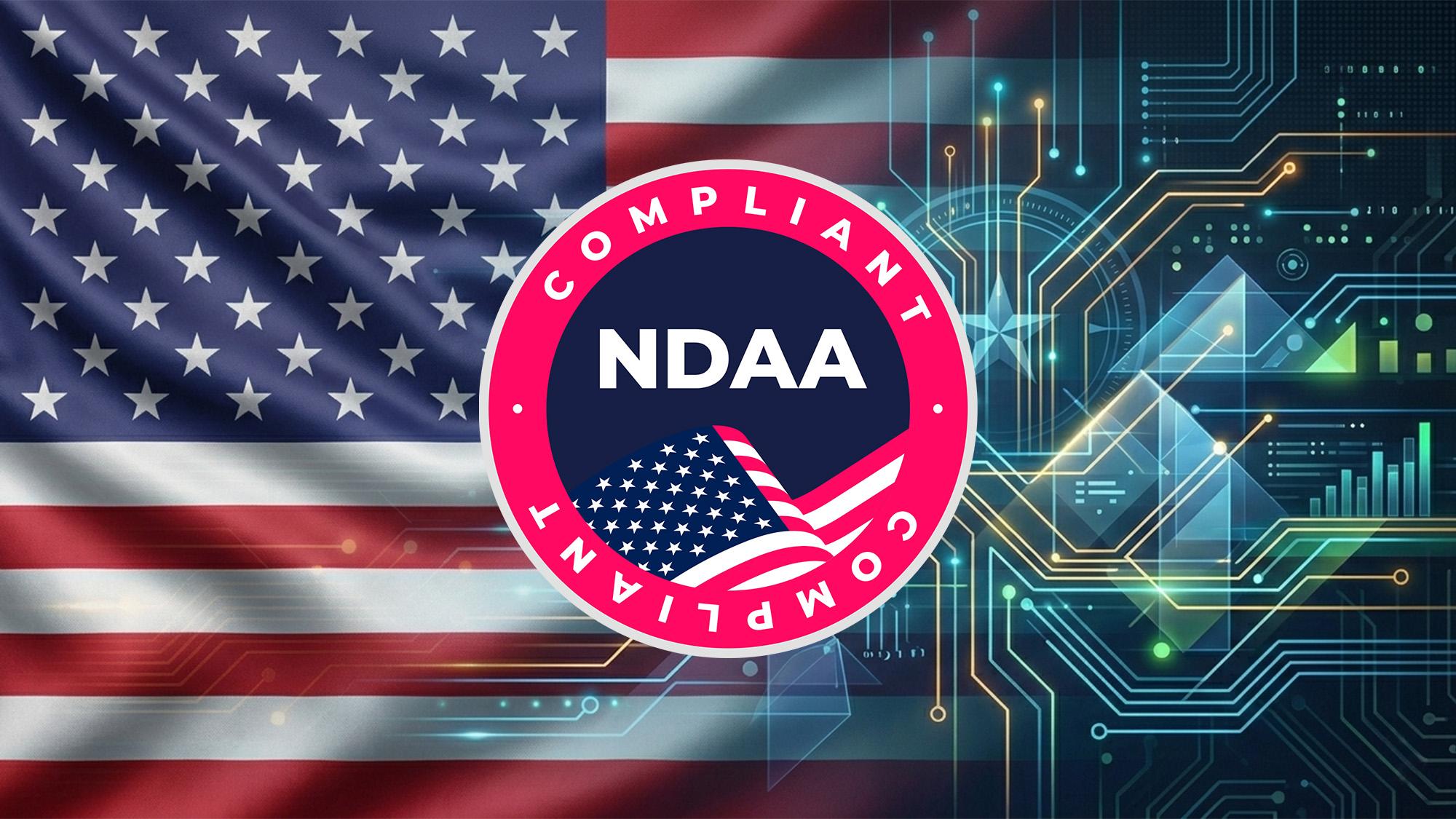
Survision LPR ANPR Cameras are NDAA compliant. This reflects a clear commitment to security, transparency, and long-term reliability. Just as importantly, it provides an opportunity to clarify what NDAA compliance means and why it matters beyond regulatory requirements.
What is NDAA Compliance?
The National Defense Authorization Act (NDAA) is a U.S. federal law that, among other things, includes provisions related to national security and technology usage.
Section 889 of the NDAA specifically restricts the use of “any equipment, system, or service that uses covered telecommunications equipment or services as a substantial or essential component of any system, or as a critical technology as part of any system” from a Covered foreign country. “Covered foreign country, as defined in section 889, means the People's Republic of China.”
“Covered telecommunications equipment or services,” as defined in the statute, means:
- Telecommunications equipment produced by Huawei Technologies Company or ZTE Corporation (or any subsidiary or affiliate of such entities);
- For the purpose of public safety, security of Government facilities, physical security surveillance of critical infrastructure, and other national security purposes, video surveillance and telecommunications equipment produced by Hytera Communications Corporation, Hangzhou Hikvision Digital Technology Company, or Dahua Technology Company (or any subsidiary or affiliate of such entities);
- Telecommunications or video surveillance services provided by such entities or using such equipment;
- Telecommunications or video surveillance equipment or services produced or provided by an entity that the Secretary of Defense, in consultation with the Director of National Intelligence or the Director of the Federal Bureau of Investigation, reasonably believes to be an entity owned or controlled by, or otherwise connected to, the government of a covered foreign country.”
The goal is to reduce potential security risks associated with untrusted components in critical infrastructure.
In practical terms, NDAA compliance means that a solution does not use prohibited hardware or components and aligns with strict supply chain and security requirements.
Why NDAA Compliance Matters
Stronger Security and Trust: By excluding restricted components, organizations reduce exposure to potential vulnerabilities and better protect sensitive data and infrastructure
Meeting Procurement Requirements: For many U.S. government projects, NDAA compliance is mandatory. However, this requirement is no longer limited to public sector contracts. Increasingly, private organizations are adopting similar standards to ensure long-term security and eligibility.
A Growing Industry Standard: What began as regulation is becoming a benchmark for trust across smart cities, transportation, and parking systems.
Cybersecurity as a Core Concern: Modern vehicle recognition and parking systems process significant volumes of data and are often integrated into broader IT infrastructure. This makes them part of the overall cybersecurity posture of an organization.
NDAA compliance helps mitigate risks by:
- Limiting exposure to potentially compromised hardware
- Encouraging greater transparency in system architecture
- Reducing the likelihood of unauthorized access or data leakage
- As cyber threats become more sophisticated, the origin and integrity of system components are increasingly important.
What It Means for the Parking and Mobility Industry
Vehicle recognition technologies, such as License Plate Recognition (LPR), play a critical role in access control, enforcement, and operational efficiency. These systems are often deeply integrated into infrastructure that manages high volumes of data and vehicle movement.
Non-compliant systems can introduce several challenges:
- Limited eligibility for public tenders
- Increased scrutiny in security audits
- Potential vulnerabilities within the system architecture
- As a result, NDAA compliance is becoming a baseline expectation for projects involving parking operators, municipalities, airports, and mobility hubs.
What This Means for our Customers
For our partners and customers, NDAA compliance translates into tangible advantages:
- Simplified procurement processes for government and regulated projects
- Reduced compliance risk when deploying or scaling systems
- Confidence in long-term viability, as regulations continue to tighten
- Alignment with security best practices across the industry
- It allows organizations to focus on operations and innovation without being constrained by regulatory uncertainty.
Our Approach
Achieving NDAA compliance is not a single decision, it is the result of deliberate choices across the entire product lifecycle.
At Survision, this includes:
- Careful selection of hardware components and suppliers
- Rigorous review of our supply chain
- Ongoing commitment to transparency and documentation
- Designing systems with security and compliance in mind from the outset
Global Commitment
While NDAA compliance is primarily a regulatory requirement for certain projects in the United States, its underlying principles, security, transparency, and trusted sourcing, are increasingly relevant worldwide.
At Survision, this standard is not applied selectively. We have chosen to align with NDAA requirements at a global level, ensuring that all our solutions, regardless of deployment location, adhere to the same high expectations for cybersecurity and supply chain integrity.
“Every day, I work closely with our hardware team to select the best components for our products. Achieving NDAA compliance confirms that the choices we’ve made are the right ones to ensure the level of security and trust we strive to deliver”
Thomas Gallimard – Head of Hardware Engineering
This approach allows our customers across Europe, North America, and other international markets to benefit from a consistent level of security and reliability. It also reflects a broader commitment: anticipating regulatory evolution and adopting best practices proactively, rather than reactively.
If you would like to learn more about what this means for your projects or deployments, our team is always available to continue the conversation.
About SURVISION 
SURVISION Cameras and Cloud Applications are specifically designed for vehicle control and identification solutions such as Ticketless Parking, Traditional Parking, Parking Enforcement, Access Control, Security, and more. Survision is a global leader in license plate recognition and vehicle identification with over 60,000 cameras installed worldwide.















Comments
There are no comments yet for this item
Join the discussion