

Urbiotica: How Cameras and Artificial Intelligence Are Transforming Smart Parking
The evolution of smart parking
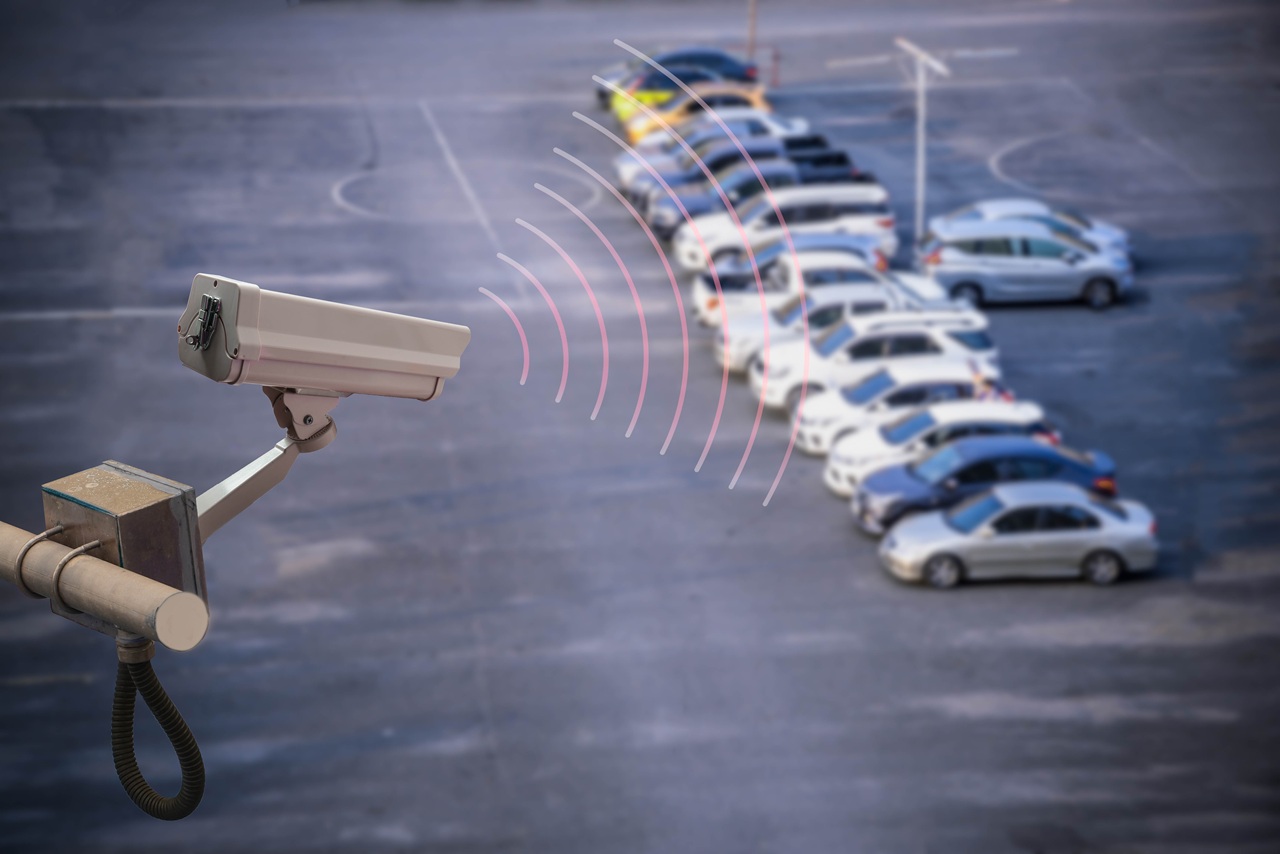
For years, the digitalization of urban parking has been closely linked to the deployment of IoT sensors. These technologies have enabled cities around the world to begin understanding what happens on their streets: occupancy, turnover, and violations.
However, as management needs evolve—especially in complex or high-density environments—so do the solutions.
In this context, Urbiotica expanded its portfolio in 2021 by incorporating camera-based detection solutions powered by artificial intelligence, with the aim of complementing its sensor technology and addressing new scenarios.
Since then, these solutions have been deployed across multiple projects and cities, establishing themselves as an efficient alternative in environments where coverage, cost, or installation complexity make cameras a more suitable option.
Additionally, the solution has significantly evolved over the years, incorporating improvements in accuracy, adaptability, and management capabilities. This has enabled an expansion of use cases and strengthened its role within smart parking projects.
Increasingly demanding parking management
Cities no longer only need to know whether a parking space is free or occupied.
The challenge now involves:
- Managing high-turnover areas such as loading and unloading zones
- Monitoring non-delimited spaces or areas with complex layouts
- Optimizing investment in large-scale projects
- Obtaining richer data for parking usage analysis
- Integrating all information into cloud-based smart parking management platforms
In many cases, the choice of technology depends on the type of environment and project objectives.
In this sense, in certain scenarios—especially those with high parking density or greater automation requirements—AI-powered camera solutions are particularly efficient. They expand the possibilities of smart parking and enable new use cases.
Different environments, different needs
Not all smart parking projects follow the same logic.
In urban environments, cities need tools to efficiently manage public space, particularly in critical areas such as loading and unloading zones, where control and turnover are essential.
In off-street environments, such as supermarkets or shopping centers, the main goal is to maximize parking availability and improve the user experience.
This is where a key factor comes into play: cost and scalability.
In high-density environments, where a single camera can cover dozens of parking spaces, computer vision-based solutions are particularly competitive in terms of cost.
This enables large-scale projects to be implemented with lighter infrastructure and shorter deployment times, while maintaining a high level of control over parking usage.
Solution: operational efficiency through computer vision
Camera- and AI-based solutions are already part of numerous operational smart parking projects, especially in environments where operational efficiency and scalability are key.
In this context, solutions such as U-Spot VISIO allow the detection of occupancy across multiple parking spaces through image analysis, without the need to act on each individual space.
This is a proven solution, deployed in various real-world projects, demonstrating its ability to adapt to different environments and provide reliable parking usage data.
Beyond the data, its main advantages are operational:
- Optimization of investment per monitored space, especially in high-density environments
- Coverage of multiple spaces with a single infrastructure, reaching dozens of spaces per camera under optimal conditions
- High accuracy in detection and vehicle turnover analysis, with reliability levels above 99%
- Generation of detailed parking usage data, such as real-time occupancy and length of stay
- Compliance with data protection regulations (GDPR)
- Easy integration with management platforms, applications, or existing systems thanks to its open architecture
Additionally, as a cloud-based software and AI solution, it can evolve and adapt to new requirements without the need to intervene in the deployed infrastructure.
Real projects: two environments, one objective
On-street management: The case of L’Hospitalet de Llobregat
In L’Hospitalet, the challenge was to improve the management of loading and unloading zones—a key element for economic activity but difficult to control in practice.
To address this, Urbiotica implemented one of the largest AI-based loading and unloading management deployments in Spain, installing more than 400 cameras across the city.
The solution has enabled:
- Real-time monitoring of space usage
- Automatic detection of violations
- Increased turnover in high-demand areas
- Optimization of enforcement teams through an alert-based system
This project demonstrates how computer vision can scale public space management and improve city-wide efficiency.
Off-street environment: Lidl
In Lidl’s case, the objective was to optimize parking usage in supermarkets with high vehicle turnover.
To achieve this, Lidl has digitized its parking facilities across Europe using Urbiotica’s guidance technology, with cameras connected to the U-Admin platform to detect spaces in real time and guide users to available spots.
The system is currently deployed, with a total of 181 monitored spaces.
The solution has enabled:
- Real-time visibility of parking occupancy
- Improved space availability for customers
- Reduced time spent searching for parking
- Optimized parking operations with more efficient infrastructure
👉 https://urbiotica.com/caso-exito/lidl-aparcamiento-inteligente-en-supermercados-con-urbiotica/
In this type of environment, the ability to cover multiple spaces with a single infrastructure is key to ensuring project efficiency.
An evolution that is already a reality
The adoption of camera-based solutions marks a turning point in the evolution of smart parking.
More and more projects are incorporating computer vision as a key component, especially in environments where cost optimization, fast deployment, and flexibility are critical factors. This trend is already a reality: Urbiotica currently monitors around 3,000 parking spaces using cameras across different types of projects.
This growth reflects not only technological evolution but also an increased ability to adapt to the specific needs of each environment—whether on-street or off-street.
In this context, the real value lies in the ability to offer a comprehensive portfolio of solutions that covers all scenarios: from computer vision-based projects to deployments where sensors remain essential, or a combination of both.
In practice, many projects evolve towards hybrid models: where one technology falls short or is less efficient, the other takes over. All of this is integrated under a single platform, enabling unified, flexible, and results-oriented management.
About Urbiotica
Urbiotica is a technology company specialized in smart parking and mobility solutions for cities and complex urban environments. With a strong focus on IoT, artificial intelligence, and data analytics, Urbiotica helps public authorities and parking operators improve traffic flow, optimize parking operations, and enhance the overall user experience. Its solutions are deployed in cities and facilities worldwide, supporting data-driven decision-making for more efficient, sustainable, and accessible urban mobility.
Learn more about Urbiotica and its smart parking solutions at www.urbiotica.com
















Comments
There are no comments yet for this item
Join the discussion