

Urbiotica's Intelligent Control of Charging Stations for Electric Vehicles in Rome
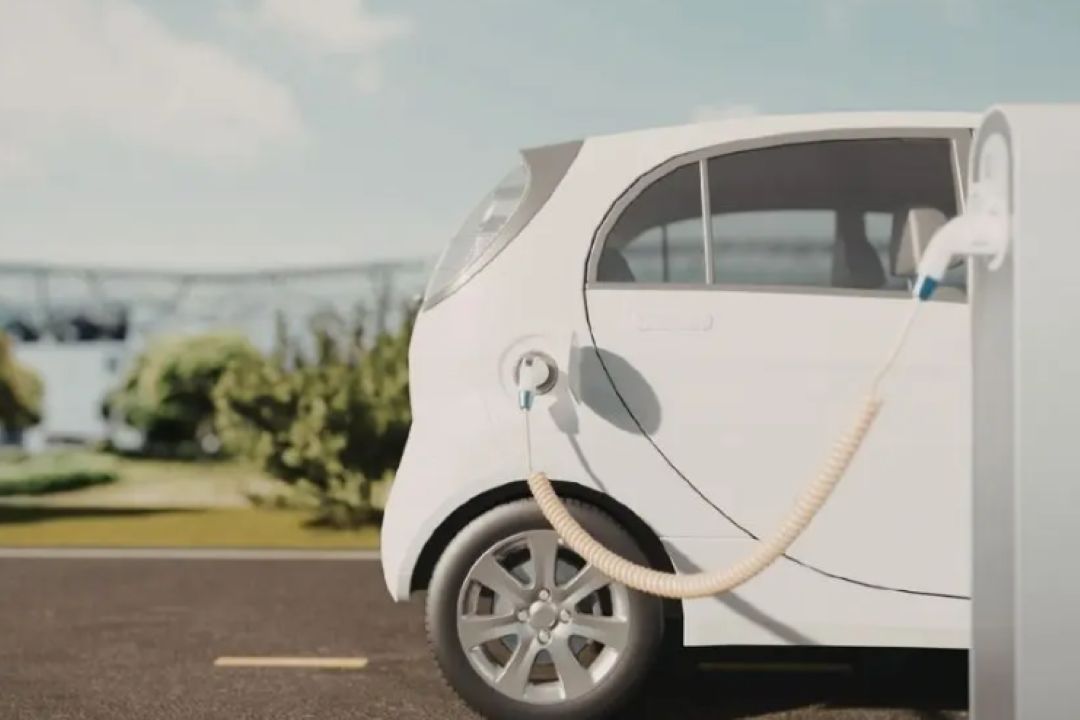
Electric mobility continues to grow in major European cities, and with it the need to efficiently manage the charging infrastructure. However, the challenge is no longer just to install more chargers, but to ensure that charging stations are actually available when users need them.
In urban environments, especially at fast charging points, it is common to find vehicles occupying spaces without being charged or remaining parked for longer than allowed. This situation reduces vehicle turnover, limits the real availability of chargers and generates a negative experience for drivers.
To respond to this challenge, Rome is deploying together with one of the largest operators of recharging points in Italy an intelligent control system on about 430 recharging stations, with about 380 already operational. The aim is to monitor the actual use of the places and act more efficiently in situations of misuse.
This project reflects an increasingly important trend in urban mobility: combining charging infrastructure with smart parking technologies and data analytics to optimize operations and improve user service.
Detecting Improper Occupation of Recharging Stations
One of the main problems with charging stations is that many systems only detect whether a station is occupied, but not whether the vehicle is actually charging.
The solution implemented in Rome makes it possible to identify vehicles occupying a space without initiating an active charging session. Thanks to this capability, the city can detect situations such as:
- Unloaded parked vehicles.
- Loads completed without releasing the spot.
- Excesses of time with respect to the regulations.
- Prolonged occupations that reduce turnover.
When misuse is detected, the system generates automatic alerts that are sent to the municipal police for verification and action.
This approach allows moving from a manual supervision model to an automated management based on real-time data, improving operational efficiency and optimizing inspection work.
To achieve this level of accuracy, it is essential to have technologies capable of detecting occupancy on a single-space basis. Solutions such as U-Spot IoT make it possible to monitor each parking space in real time using intelligent sensors.
In complex urban environments, solutions based on artificial intelligence and artificial vision such as U-Spot Visio, capable of offering advanced and scalable monitoring, also stand out.
Data Integration for More Efficient Management
The key to the project developed in Rome lies in the integration of different sources of information. The system crosses the occupancy data obtained by the sensors with the information coming from the charging point management system or CPMS.
This integration allows validation:
| Information analyzed | Result |
| Occupancy of the spot | Know if a vehicle is parked |
| State of charge | Confirm if there is an active load |
| Time of permanence | Detect excesses with respect to regulations |
| Usage history | Analyze patterns and optimize management |
Thanks to this combination of data, the city can determine whether a space is being used correctly or whether improper occupancy is occurring.
In addition to improving operational control, this model facilitates much more efficient and scalable management of the recharging infrastructure.
To centralize all this information and manage the infrastructure from a single environment, platforms such as the Smart Parking Platform allow real-time monitoring of the status of parking spaces and analysis of key usage indicators.
Actual Versus Theoretical Availability
One of the great challenges in the management of recharging points is the difference between theoretical availability and real availability.
In many traditional systems, a space is shown as free simply because there is no active loading session. However, that does not necessarily mean that the space is available for another driver.
The result is a frustrating experience for the user, who goes to an apparently available point and discovers that it is occupied by a vehicle that is not charging.
The combination of occupancy sensors and load data solves this problem by providing reliable information on the actual availability of parking spaces.
This significantly improves the user experience and facilitates more efficient urban mobility management.
In addition, these solutions can be integrated with parking guidance systems, helping to direct drivers to actually available parking spaces and reducing the traffic arising from the search for parking.
What the Abuse Data Reveal
Experience with projects of this type shows that the misuse of charging stations is not an isolated problem.
In recent analyses carried out by Urbiotica on monitored parking spaces, it has been observed that approximately 1 in 4 parked vehicles is not actively charging. Moreover, about half of these situations last for more than 30 minutes.
This data allows us to better understand user behavior and identify particularly critical locations.
Advanced analytics makes it easy:
- Detect areas with higher levels of improper occupation.
- Identify conflictive time slots.
- Optimize control operations.
- Improve future infrastructure planning.
Parking data analytics solutions make it possible to transform all this information into actionable metrics for cities and operators.
Benefits of Smart Control of Recharging Stations
The implementation of intelligent control systems generates direct benefits for public administrations, operators and users.
Increased vehicle turnover
By reducing misoccupancy, more drivers can use the spaces throughout the day.
Better actual availability
Users have access to more accurate information about which spots are actually available.
Operational optimization
The control equipment acts only when the system detects real incidents, improving the efficiency of inspections.
Increased regulatory compliance
Automation facilitates the application of usage policies and maximum parking time.
In this regard, parking time control solutions help to automatically monitor overstays and improve vehicle turnover.
Better user experience
Drivers reduce search times and increase confidence in the public charging network.
In addition, parking user control systems improve traceability and optimize the operational management of parking spaces.
Key Technology for Smart Urban Mobility
The evolution of electric mobility requires increasingly connected, automated and data-driven infrastructures.
In this context, smart parking technologies play a strategic role within smart cities.
The combination of IoT sensors, artificial intelligence, management platforms and advanced analytics allows optimizing the use of existing infrastructure and improving urban efficiency.
In addition, these solutions contribute to:
- Reduce urban congestion.
- To reduce emissions derived from the search for parking.
- Improve the efficiency of public infrastructure.
- Optimize municipal resources.
- Promote more sustainable mobility.
Urbiotica has different technologies and solutions specialized in smart parking and intelligent urban mobility, adapted to the needs of cities and infrastructure operators.
Rome Moves Towards More Efficient Management of Electric Recharging
The project developed in Rome demonstrates that the future of electric mobility does not depend solely on deploying more charging points.
True efficiency is achieved when cities are able to properly manage infrastructure use through intelligent control systems, automation and data analysis.
The combination of real-time monitoring, platform integration and advanced analytics allows to improve the actual availability of spots, optimize operations and offer a better user experience.
As the number of electric vehicles increases, this type of solution will become increasingly important to ensure efficient, sustainable and future-proof urban mobility.
About Urbiotica
Urbiotica is a technology company specialized in smart parking and mobility solutions for cities and complex urban environments. With a strong focus on IoT, artificial intelligence, and data analytics, Urbiotica helps public authorities and parking operators improve traffic flow, optimize parking operations, and enhance the overall user experience. Its solutions are deployed in cities and facilities worldwide, supporting data-driven decision-making for more efficient, sustainable, and accessible urban mobility.
Learn more about Urbiotica and its smart parking solutions at www.urbiotica.com
















Comments
There are no comments yet for this item
Join the discussion