

Vaxtor Technologies: Comparing ALPR Providers - Key Features to Look for in 2026
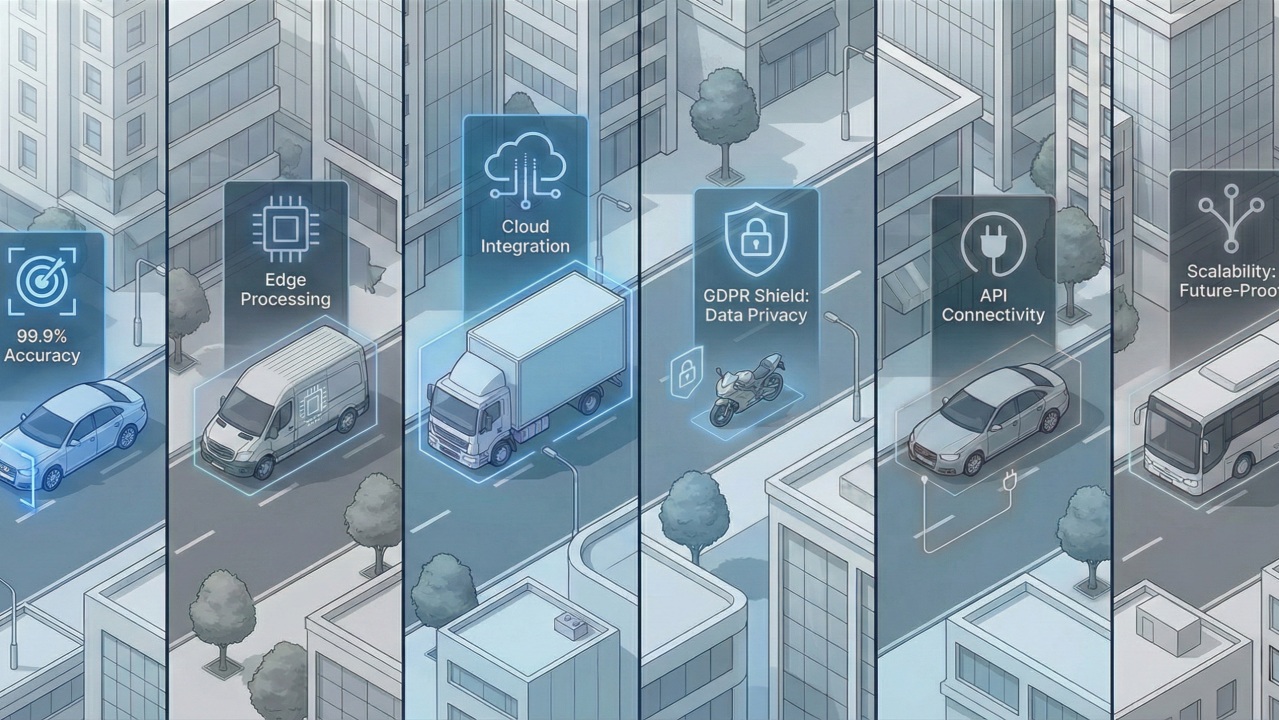
As demand for smart surveillance and automated vehicle intelligence continues to grow, the global ALPR (Automatic License Plate Recognition) market is evolving rapidly. By 2026, choosing the right ALPR provider is no longer just about plate-reading accuracy — it requires evaluating integration capabilities, processing speed, deployment flexibility, data governance, and the maturity of AI models.
This article outlines the key factors security professionals, city planners, law enforcement agencies, and private organizations should consider when comparing ALPR vendors in an increasingly competitive and complex market.
Market Outlook for ALPR in 2026
The global ALPR market is expected to continue its strong growth through 2026, driven by demand across law enforcement, smart cities, parking, logistics, and private security. Industry trends shaping the market include:
- Wider adoption of edge-based processing for low-latency and data-sovereign deployments
- Growth of cloud-enabled ALPR platforms for scalability and centralized analytics
- Expansion of vehicle analytics beyond plate reading
- Increasing emphasis on data privacy, compliance, and transparency
As ALPR technology matures, selecting the right solution requires looking beyond basic functionality and focusing on long-term adaptability.
1. Plate Recognition Accuracy and Performance
High recognition accuracy under real-world conditions remains a fundamental requirement. Modern ALPR systems must perform reliably across:
- Day and night conditions
- Variable lighting and weather
- Different vehicle speeds and camera angles
Rather than focusing on isolated benchmark figures, organizations should evaluate performance based on real operational environments.
What to look for:
- Robust OCR powered by continuously trained AI models
- Broad support for international plate formats
- Consistent performance under load, not just in lab conditions
2. Edge, On-Premises, Cloud, and Hybrid Deployment
By 2026, ALPR deployments are rarely confined to a single architecture. Depending on latency, privacy, connectivity, and operational needs, organizations may deploy ALPR:
- On the edge (directly on cameras or embedded devices, with minimal latency)
- On-premises (processing on local servers within a controlled network)
- In the cloud (centralized processing, elastic scalability, remote access)
- In hybrid architectures combining local processing with cloud-based services
On-premises and edge deployments remain essential for customers requiring strict data control, predictable performance, or operation in disconnected or bandwidth-constrained environments.
What to look for:
- Support for edge, on-premises, and cloud deployments from the same vendor
- Reliable operation without permanent cloud connectivity
- Ability to combine local processing with cloud-based analytics or management
- Support for hybrid architectures and centralized lifecycle management
3. Video Analytics and AI Capabilities Beyond Plates
Modern ALPR systems increasingly act as vehicle intelligence engines, not just plate readers. In addition to license plates, advanced solutions can extract:
- Vehicle make, model, color, class, and orientation
- Traffic and movement patterns
- Contextual data to support investigations or automation
These capabilities enable use cases such as fraud detection, investigative review, traffic optimization, and operational analytics.
What to look for:
- Vehicle analytics integrated into the same engine as ALPR
- Compatibility with existing video analytics pipelines
- Event-driven workflows and automation support
4. System Integration and Interoperability
ALPR rarely operates in isolation. A future-proof solution must integrate cleanly with existing systems such as:
- Video Management Systems (VMS)
- Access control and security platforms
- Parking and traffic management systems
- Law enforcement and investigative tools
What to look for:
- Well-documented APIs and SDKs
- Compatibility with leading VMS platforms
- Hardware-agnostic design without vendor lock-in
5. Data Privacy, Retention, and Regulatory Compliance
As regulatory scrutiny increases, ALPR providers must support responsible and transparent data handling. Key considerations include:
- Compliance with GDPR, CCPA, and regional regulations
- Clear data ownership and retention controls
- Secure access management and auditing
What to look for:
- Configurable retention and deletion policies
- Encryption of data at rest and in transit
- Role-based access control and audit logging
6. Scalability and Total Cost of Ownership
An ALPR system should scale smoothly from small deployments to large, multi-site environments without architectural redesign.
What to look for:
- Transparent and flexible licensing models
- Centralized monitoring and management
- Remote updates and long-term support without forced hardware refreshes
7. Vendor Track Record and Support
Technology alone is not enough. Vendor experience, support quality, and long-term roadmap matter.
What to look for:
- Proven deployments in comparable environments
- Responsive technical support and clear SLAs
- Comprehensive documentation and onboarding resources
Why Vaxtor Is a Competitive Choice
Vaxtor stands out in the ALPR market by offering true deployment freedom. Its technology can be deployed:
- On the edge (directly on cameras or embedded devices)
- On-premises (within the customer’s own infrastructure)
- In the cloud
- Or in hybrid architectures combining these approaches
This flexibility allows organizations to align performance, privacy, and scalability with their specific operational and regulatory requirements — without being locked into a single infrastructure model.
Vaxtor’s ALPR engine is designed as a single, consistent analysis core, delivering:
- High recognition accuracy across diverse lighting, weather, and camera conditions
- Integrated vehicle analytics (make, model, color, class, and position)
- Broad compatibility with third-party cameras, VMS platforms, and security systems
- Continuous AI improvements without forcing infrastructure changes
By supporting edge, on-premises, and cloud deployments equally well, Vaxtor enables organizations to build ALPR systems that evolve over time — technically, operationally, and geographically.
About Vaxtor
 Vaxtor is a computer vision company specializing in OCR and ALPR technologies deployed on-edge, on-prem, and now in the cloud. Vaxtor’s products power mission-critical use cases across transportation, security, retail, logistics, and smart-city ecosystems.
















Comments
There are no comments yet for this item
Join the discussion