For most parking system operators, parking projects are rarely just about technology, they are about constraints.
You deal with limited time on-site, systems that cannot be taken offline, and the pressure to deliver a solution that won't become a maintenance burden three months down the road. In these environments, the primary risk isn't the software—it’s the implementation.
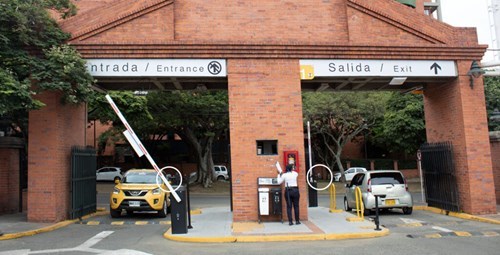
At the Chipichape Shopping Center in Cali, Colombia, the challenge was a classic one: long queues, manual ticket processes, and a high-traffic environment that couldn't be paused for a traditional overhaul.
Improving Performance Without a Shutdown
The requirement was twofold: modernize the throughput and do it without disrupting daily operations. In the parking industry, disruption equals lost revenue and frustrated tenants.
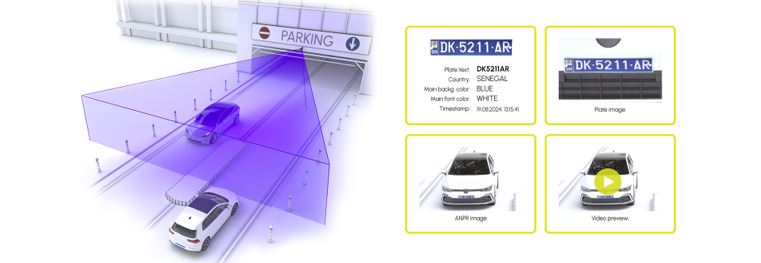
The rollout—transitioning from manual, ticket-based entry to automated identification—was completed in just 27 days. Critically, the transition didn't require a facility-wide shutdown. Adaptive Recognition’s Einar ANPR camera played a key role in enabling this smooth transition, combining straightforward installation and integration with reliable vehicle identification while minimizing disruption to ongoing operations.
For an integrator, this is the ultimate win—changing the engine while the car is still driving.
The Logic of Removal: 14 Seconds to 2 Seconds
The upgrade focused on a simple logical shift: performance doesn't come from making manual steps faster; it comes from removing them altogether.
By replacing physical ticket interactions with automated vehicle identification, the stop-and-go pulse of the entrance was eliminated. The results are quantifiable:
- Entry/Exit Times: Dropped from 14 seconds to roughly 2 seconds.
- Wait Times: Reduced by 85%.
- System Behavior: Peak-period traffic became significantly easier to manage.
From an implementation standpoint, this logic of removal also simplifies the site. Fewer physical touchpoints mean fewer elements that require coordination, wiring, or calibration.
The result, beyond the headline number
The more meaningful change is less visible. When vehicles no longer need to stop, queues don’t build up in the same way. Peak periods become easier to handle, and the system behaves more consistently throughout the day.
It also becomes more predictable from an operational point of view. With fewer manual steps involved, there are fewer opportunities for things to slow down or require intervention.
Life After Day One
Case studies often focus on installation and launch, but for integrators, the real test begins once the system is in daily operation. A system that performs well but requires constant tuning quickly becomes a liability for the integrator. By removing manual processes and mechanical friction, the Chipichape system became more predictable.
Einar was designed with this long-term operational reality in mind. Its straightforward integration and low-maintenance design help simplify ongoing operation, while an extended warranty of up to 10 years provides additional assurance for the long term.
- Lower Support Overhead: Fewer manual steps and maintenance requirements mean fewer emergency service calls.
- Consistent Data: Operators receive a clean, automated digital trail of every vehicle, reducing the need for manual oversight and reconciliation.
A Different Kind of Upgrade
This wasn't just a technology swap; it was a change in operational philosophy. The improvement didn't come from a faster printer or a quicker barrier arm—it came from continuous flow.
When you remove the need for the driver to interact with the infrastructure, you remove the primary cause of delays and maintenance issues.
Modernize Without the Downtime
If you’re managing parking assets where downtime isn’t an option and long-term maintenance is a key KPI, it’s time to look at where your system still depends on manual steps.
Adaptive Recognition’s ANPR-based solutions are designed for straightforward integration and reliable long-term operation. We help integrators deliver systems that stay out of the way—supporting efficient vehicle flow without adding unnecessary complexity.
Explore the Chipichape case study or get in touch with our integration expert to learn more.
About Adaptive Recognition
 Adaptive Recognition is a global leader in access control and intelligent recognition, delivering advanced technology to enhance security, simplify operations, and improve efficiency. AR's innovative hardware and software integrate seamlessly with various parking platforms, offering a flexible and user-friendly approach to access control and parking enforcement.
AR specializes in designing and manufacturing components that support the installation of gated and free-flow parking systems. The Einar camera ensures precise license plate recognition at city speeds and real-time speed measurement through video analytics. Its energy-efficient design supports solar power, making it versatile for various parking environments. For parking enforcement, the compact Lynet camera offers a highly accurate mobile ANPR solution, easily installed in patrol cars for efficient monitoring and compliance.
With a blend of local expertise and global reach, Adaptive Recognition deliver seamless, efficient solutions backed by personalized support.
Contact us to discover how we can optimize your parking systems!